
According to the data portal Statista They have 48% The Germans decided to do more sports in 2026. A study by the University of Birmingham examined the long-term effects of the Olympic Games on the propensity to play sports based on the Games of Beijing (2008) and London (2012).1. The authors note that: “While the inspiring effect of the Olympic Games has been demonstrated to trigger changes in participation behaviour, these effects have been perceived as less significant than other fundamental intrinsic (sports literacy, sports attitude and sports self-confidence) and extrinsic factors (accessibility of sports facilities and time).”
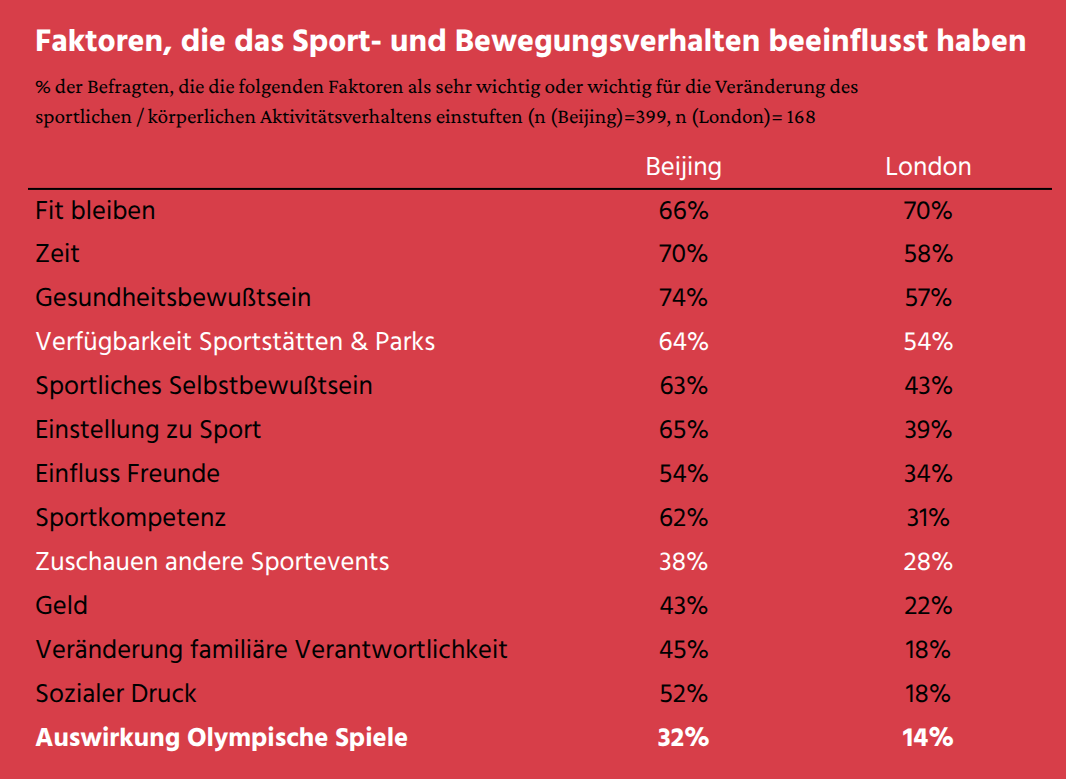
NOlympia Hamburg spokesman Eckart Maudrich In this regard:
“Olympic Games have been shown to be the most ineffective way to promote movement and sport across the board. The investment focus on the new construction of a multi-billion-dollar Olympic stadium, for which there was no demand analysis beyond the Olympic bid, is therefore not expedient. Funding for the planned disposable sports venues, which committed €1.3 billion at Paris in 2024, will also be lacking to invest in daily exercise incentives, which are favoured by sidewalk and cycling networks and decentralised sports venues.”
1 Chen, S, Liang, X, Hu, X & Yan, X 2022, Assessing the long-term inspirational impact of sporting-mega-events on sport and physical activity participation: postevents’ Evidence from the UK and China, p.26
 English (UK)
  Deutsch
  العربية
  Dansk
Dansk  Français
  Polski
  Русский
  Türkçe
  Українська
  Español